A pedestrian gate controls who enters a property, defines its boundaries, and sets the tone for the entire exterior of a home or commercial space. Choosing the wrong size or design can lead to installation problems, code violations, and a gate that fails to serve its basic function as a secure, functional entry point.
Understanding the fundamentals of pedestrian gate design and sizing starts with knowing which options are available before pedestrian gate installation begins. This article covers standard pedestrian gate dimensions, common materials, opening types, and design styles, ensuring every choice is backed by accurate information.
What Is a Pedestrian Gate?
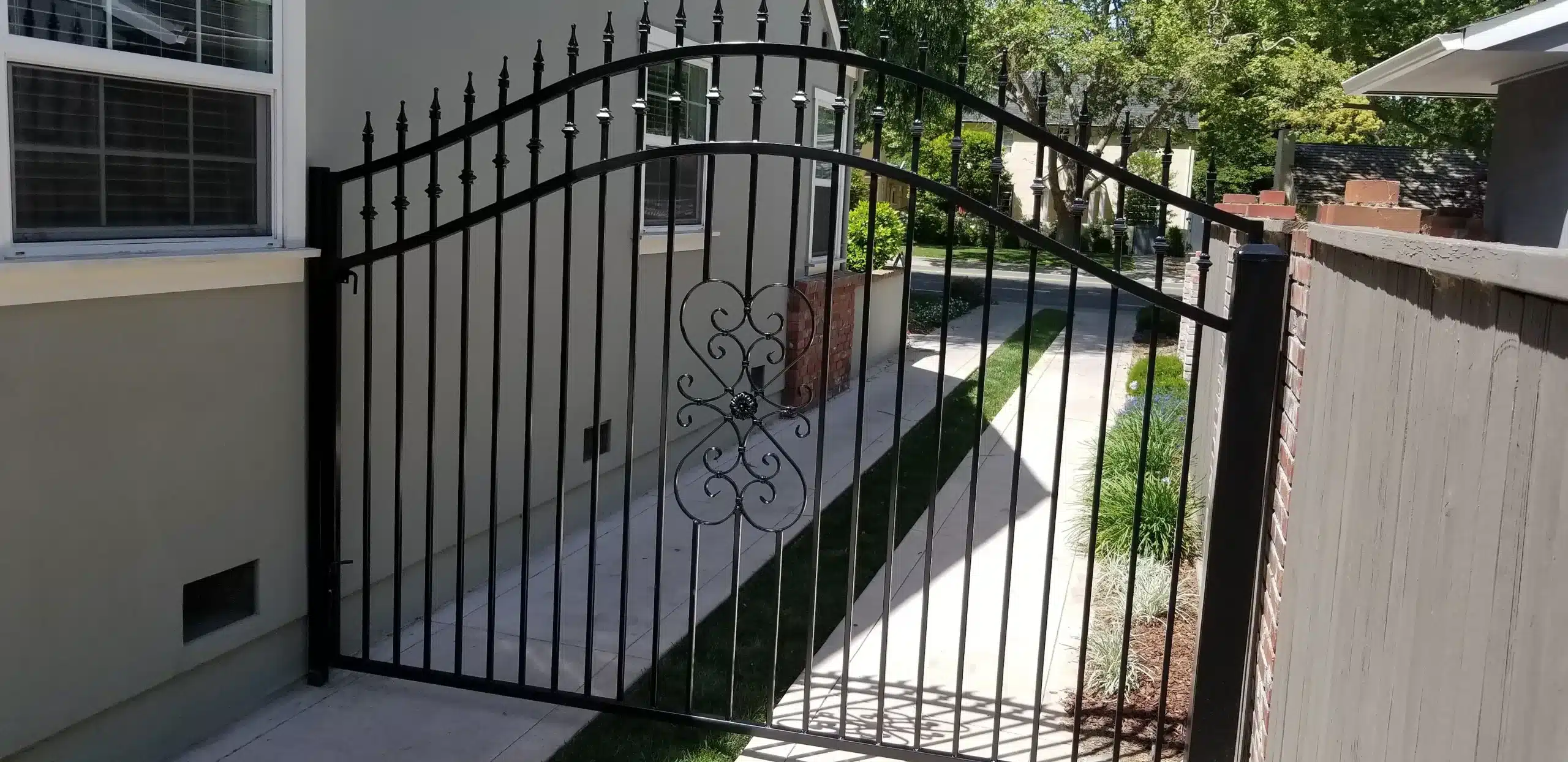
A pedestrian gate is a walk-through entry point built specifically for foot traffic, and it differs from a driveway gate in that it controls pedestrian access at the boundary of a residential or commercial property and does not accommodate vehicles.
Key characteristics and features include:
- Designed for foot traffic only, not vehicle entry
- Installed along fence lines, side yards, courtyards, and backyard entrances
- Operates manually or through an automated system for added convenience
- Built with a latch, lock, or access control mechanism to secure the entry point
- Complements the surrounding fencing material and overall property design
To understand what to look for before committing to a gate, read our guide on What to Know Before Getting a Pedestrian Gate, which covers the most important decisions property owners in Sacramento face before installation begins.
Common Pedestrian Gate Materials
The material used in a pedestrian gate directly affects its longevity, maintenance needs, and compatibility with the gate design.
Material | Durability | Maintenance | Best For |
Steel | Very High | Low | Modern and traditional designs |
Wood | Moderate | High | Privacy and natural aesthetics |
Vinyl | High | Very Low | Clean, simple looks |
Iron | High | Moderate | Classic decorative styles |
Composite | High | Low | Low-maintenance wood appearance |
To get a full breakdown of which option holds up longest, read our guide on Pedestrian Gate Materials: Which One Lasts Longest?, which explains how each material performs over time in residential and commercial settings.
Standard Pedestrian Gate Sizes
Standard Width Options
Width is the first measurement to confirm before purchasing a pedestrian gate for any property type.
Standard width guidelines to follow include:
- 36 inches is the baseline standard fence gate width for residential walk-through gates
- 48 inches is the preferred standard pedestrian gate width, fitting wheelchairs, strollers, and push mowers
- Double gates work best when the opening exceeds 48 inches
- Measure width at both the top and bottom since openings are rarely perfectly even
- Available space on the swing side must also factor into the final width decision
Width confirmed early prevents fitting problems and hardware mismatches during installation.
Standard Height Range
Height determines how much privacy, security, and visual balance a pedestrian gate delivers along any fence line.
Common height ranges to know include:
- Residential pedestrian gates typically range from 4 to 6 feet tall
- A 4-foot gate suits decorative front yard or garden gate applications
- Privacy-focused backyard gate installations generally call for a full 6-foot height
- Standard pedestrian gate size for most Sacramento homes falls at 5 feet
- Gates exceeding 6 feet may require a permit under Sacramento’s local ordinances
Matching gate height to the surrounding fence line creates a proportional and finished exterior appearance.
Ground Clearance Guidelines
Ground clearance keeps a pedestrian gate functioning smoothly across different terrain types and seasonal conditions.
Critical clearance factors to consider include:
- Standard clearance at the bottom sits between 2 and 4 inches
- Too little clearance causes dragging on debris, uneven pavers, or grass
- Too much clearance creates a gap that compromises security along the fence line
- Sacramento properties with seasonal soil movement benefit from slightly larger clearance
- Ground surface must be level and stable before installation begins
The ground surface beneath the gate must be level and stable before installation begins to maintain consistent clearance.
Residential vs. Commercial Sizes
Pedestrian gate dimensions differ between residential and commercial applications because functional demands on each are fundamentally different.
Residential | Commercial | |
Standard Width | 36 to 48 inches | 48 inches minimum |
Standard Height | 4 to 6 feet | 6 to 8 feet |
Gate Configuration | Single panel | Single or double panel |
Size Governed By | HOA and local ordinances | Building codes and ADA standards |
Permit Required | Sometimes | Usually |
Confirming dimensional requirements early keeps installation on schedule and avoids compliance issues after the gate is in place.
Pedestrian Gate Opening Types
Opening type determines how much space a pedestrian gate requires, how it integrates with the fence line, and how convenient it is to operate on a daily basis.
Opening Type | How It Works | Best For |
Swing Gate | Opens inward or outward on hinges | Level ground, residential properties |
Slide Gate | Moves horizontally along a track | Narrow side yards, limited swing space |
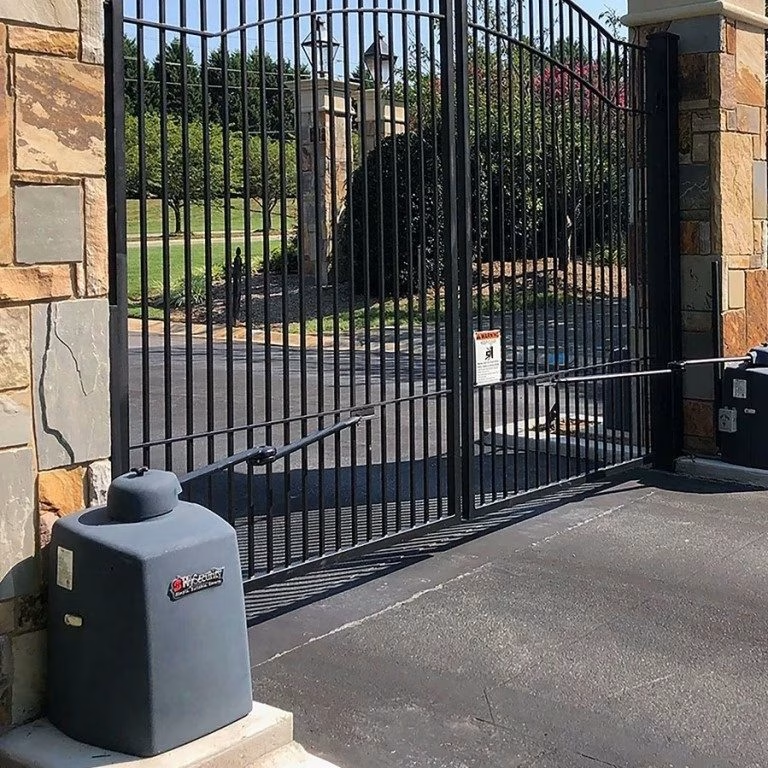
Automated Gate | Operates via motor, keypad, or remote | High-security and high-convenience applications |
Double Swing Gate | Two panels swing open from the center | Wide openings, commercial entrances |
Bi-Fold Gate | Folds inward on a hinge system | Tight spaces where swing and slide are not practical |
Confirming the correct opening type early prevents space conflicts and unnecessary adjustments during gate operator installation after the fence line is set.
Common Pedestrian Gate Designs
Pedestrian gate design shapes how a property looks from the outside and how well the gate blends with the surrounding fence line and home exterior.
Popular design styles used in residential and commercial properties include:
Design Style | Description | Best For |
Modern Slat | Horizontal or vertical panels with even spacing | Contemporary and minimalist homes |
Solid Privacy Panel | Flat panels that block the view completely | Backyard and side yard privacy |
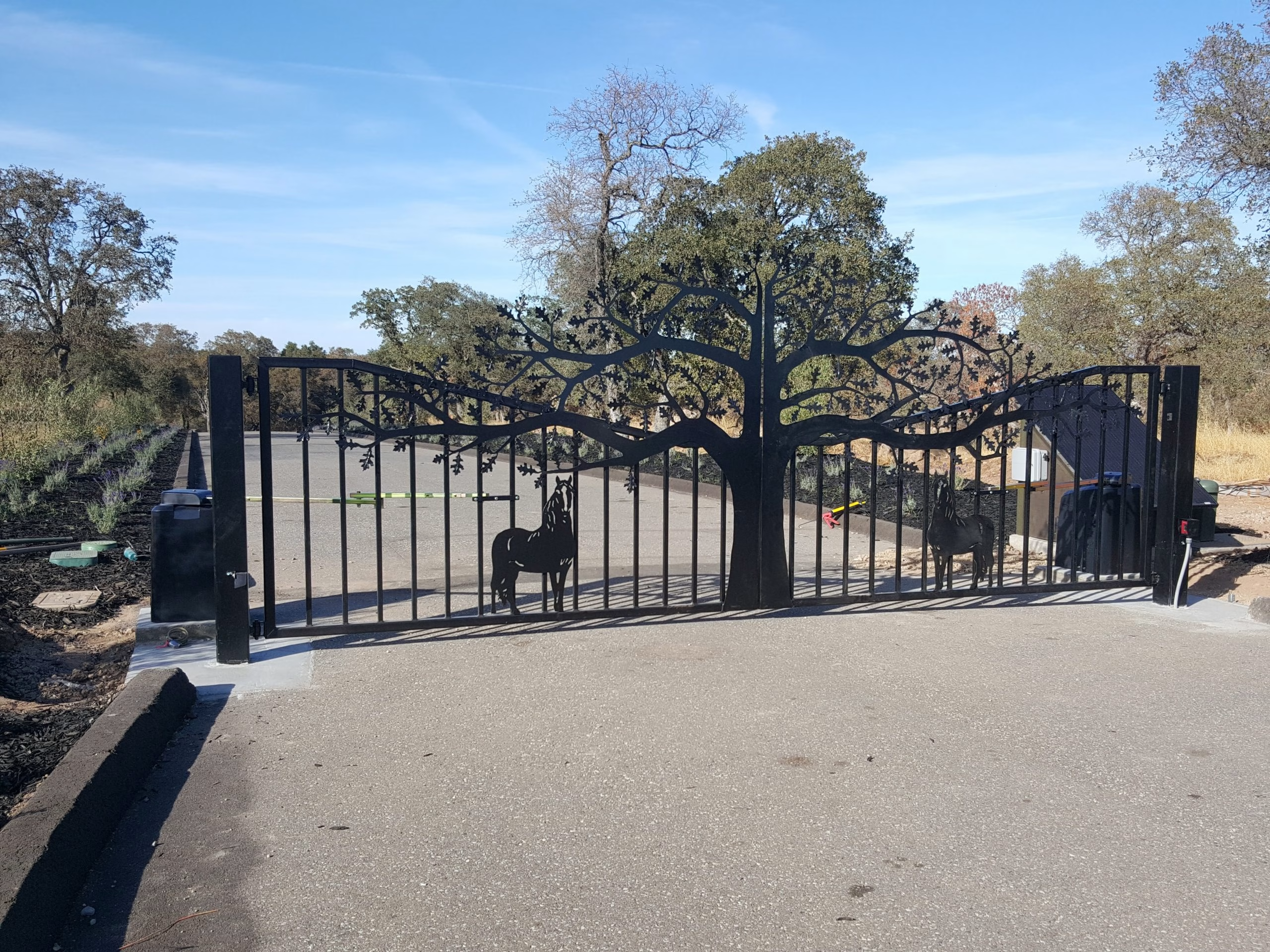
Laser-Cut Metal | Custom patterns cut into solid metal sheets | Decorative and high-end applications |
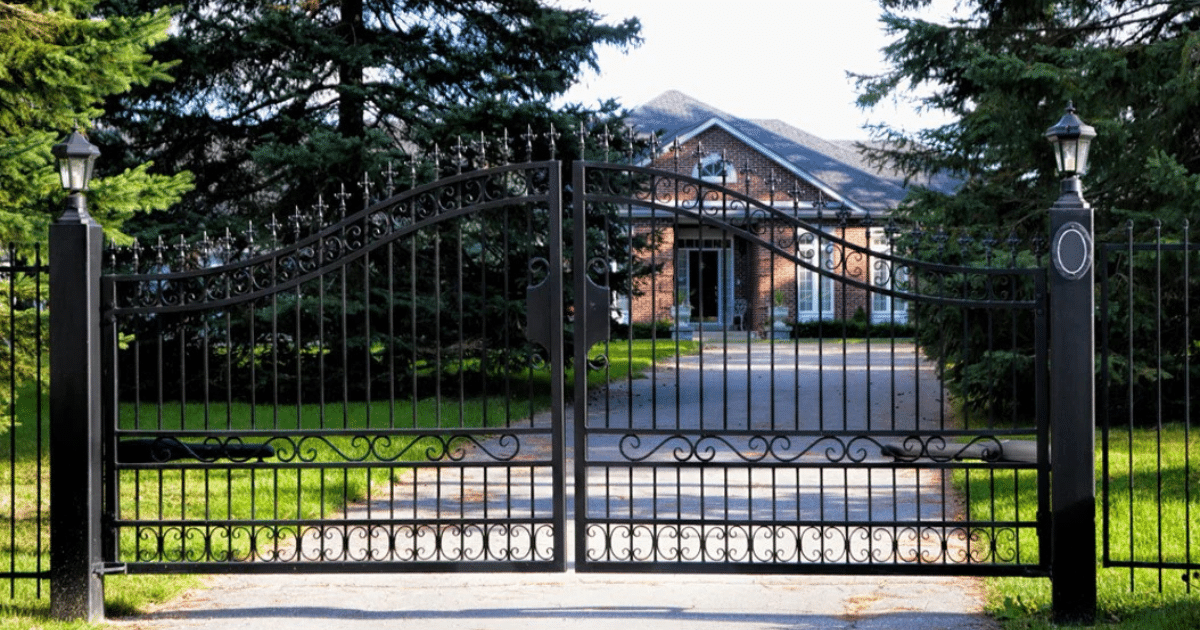
Ornamental Steel | Vertical bars with decorative finials | Traditional and classic home styles |
Timber Frame | Wood panels set within a steel or timber frame | Natural and rustic aesthetics |
To find out which lock options work best with each design style, read our guide on Pedestrian Gate Lock Options: What Works Best?, which covers every security hardware option suited to residential and commercial properties in Sacramento.
Key Factors to Consider Before Choosing a Gate
Choosing a pedestrian gate that fits well and functions well in the long term requires evaluating several property-specific conditions before making a final decision.
Key factors to evaluate before purchasing include:
- Available space and layout determine which opening type and size will work
- Foot traffic levels influence material strength and hardware grade requirements
- Sacramento building codes and HOA guidelines govern height, materials, and permits
- The fence line and home exterior should inform the final design and finish selection
- Automated gate systems and their hardware requirements must be factored into gate and post specifications early
Addressing each of these factors before purchasing ensures the gate fits the property, meets local requirements, and performs as expected from day one.
Practical Tips for Getting the Correct Gate
Getting the correct pedestrian gate comes down to preparation, accurate measurements, and matching every decision to the property’s specific demands.
Practical tips to follow before and during the selection process include:
- Measure the opening width at both the top and bottom before ordering any gate
- Match the gate material and design to the existing fence line and home exterior
- Confirm ground clearance based on the surface type beneath the opening
- Check Sacramento building codes and HOA rules before finalizing the gate specs
- Consult a gate professional for uneven, automated, or access-controlled openings
Taking these steps before purchasing saves time, avoids installation setbacks, and ensures the final gate serves the property exactly as intended.
Use This Pedestrian Gate Design and Size Guide to Make a Confident Property Decision
Understanding pedestrian gate design, size, and materials puts any property owner in a much better position to choose a gate that fits well and performs for years. Knowing what to measure, what to consider, and what designs work best for Sacramento properties makes the entire selection process straightforward and stress-free.
Whether you live in Auburn, Elk Grove, Folsom, Rancho Cordova, Citrus Heights, Galt, West Sacramento, East Sacramento, Land Park, Natomas, Oak Park, Davis, Roseville, or Rocklin, Central Valley Gates & Access Controls can secure your property and make your home into your castle!
Contact us or give us a call today, and we will walk you through every design and size option in this pedestrian gate guide to help you find the best fit for your property.