Custom driveway gates help Sacramento, CA, property owners control access while boosting curb appeal. The right gate material keeps your entrance looking consistent with your architectural style and performing well in local heat.
Material choice affects strength, appearance, and long-term maintenance requirements, which guide your final gate design. This guide breaks down what matters most so you can choose the right material with confidence and protect property value.
What Should You Consider Before Choosing a Gate Material for Your Property?
Choosing a gate material for custom driveway gates starts with security needs, Sacramento heat exposure, maintenance requirements, automation compatibility, and the final gate design goals you want the entrance to deliver.
Decision points that directly affect performance and appearance include:
- Security level needed to control access at the driveway gate and reduce vulnerability
- Sun and heat exposure can fade finishes, dry out surfaces, and affect movement
- Maintenance requirements that influence the amount of maintenance over the years
- Weight and wind load factors that impact posts, hinges, and electric gates reliability
- Visual fit with fencing, entrance gates, and the home’s architectural style
To connect gate design priorities with the right material and a more custom-looking entry, read our guide on Custom Driveway Gate Design Ideas That Don’t Feel Cookie-Cutter Mount Door, which explains how layout and design elements shape the overall result.
How Sacramento Conditions Affect Gate Material Performance
Sacramento’s heat, sun exposure, and seasonal wind can change how a gate material ages, how finishes hold color, and how smoothly a driveway gate operates over time.
Local conditions that often influence long-term performance include:
- High summer temperatures speed up coating wear and surface drying
- Strong sunlight that fades paint and stresses stain on wood gates
- Dust and grit that collect near hinges and moving contact points
- Irrigation overspray that raises corrosion risk on metal gates near posts
- Wind pressure that strains wide panels and affects alignment on entrance gates
ClimateCheck reports Sacramento’s heat risk is rising, with projections increasing from about 7 days per year above 102.3°F around 1990 to about 30 days per year above 102.3°F by 2050. That said, durable material selection matters as much as gate design to help finishes and wood stability hold up over time.
Define Your Design Goals Before Picking a Material
Clear design goals help custom driveway gates match your architectural style, meet security needs, and deliver the right balance of privacy and curb appeal before any gate material is chosen.
Design priorities to lock in early include:
- Desired privacy level versus visibility at the driveway gate entrance
- Overall gate design direction that fits the home’s architecture
- Space needs for swing or slide movement and vehicle clearance
- Style details like panels, spacing, and finish expectations
- Long-term ease of use with daily access routines
Clear goals keep the right material aligned with the final design, reduce rework during fabrication, and support a cohesive entrance that looks intentional.
Best Materials for Custom Driveway Gates
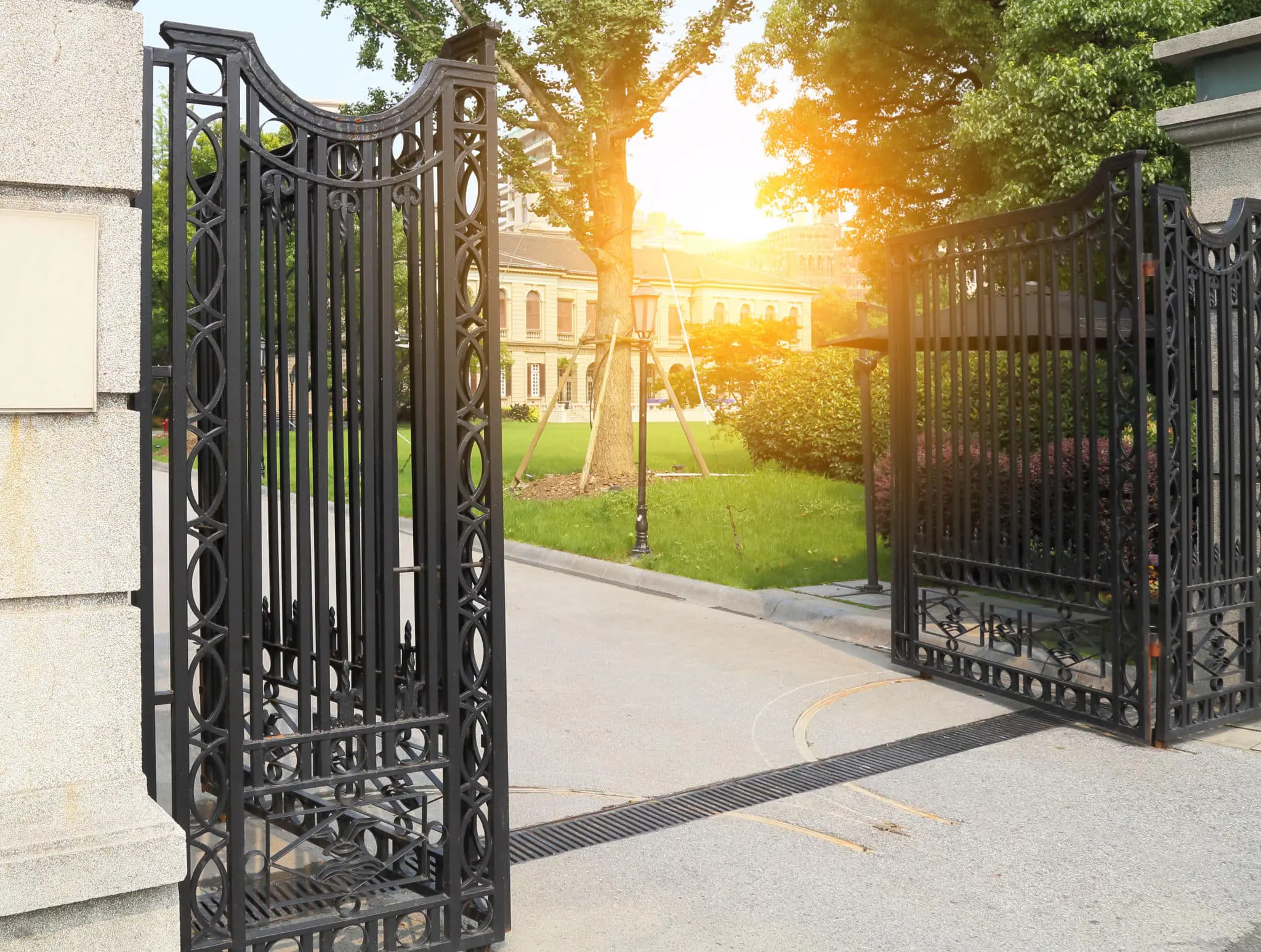
Wrought Iron for Timeless Strength and Visual Detail
Wrought iron works well for custom driveway gates that need a classic look, strong security, and detailed gate design without losing durability in daily use.
Strength-focused benefits often include:
- High resistance to bending and forced entry pressure
- Decorative patterns that elevate curb appeal and create a grand entrance
- Strong frame support for iron driveway gates with wider openings
- Reliable pairing with electric gates when built with proper hardware
Long-term durability and strong visual detail make it a great choice for security-focused entries that still prioritize curb appeal.
Steel for High-Security, Modern Custom Builds
Steel gates fit properties in Sacramento, CA that need superior strength, clean lines, and dependable performance across large openings.
Security and build advantages usually include:
- Strong framing that supports a custom metal gate with large panels
- Better stability for a metal driveway gate exposed to wind pressure
- Flexible fabrication options for modern sophistication and custom designs
- Consistent structure for steel gates that prioritize long-term alignment
Build Using Steel highlights steel’s durability for construction, which is why it remains the best material choice for strong driveway systems.
Aluminum for Low-Maintenance, Rust-Resistant Performance
Aluminum driveway gates are a great choice for property owners who want a lighter, rust-resistant gate material that makes daily operation easier.
Low-upkeep advantages commonly include:
- Reduced corrosion risk near irrigation zones compared to many metal gates
- Lower weight that supports ease of use and smoother automation response
- Clean finishes that help maintain the home’s curb appeal with less surface wear
- Practical performance for entrance gates that cycle multiple times per day
Lower weight and rust resistance make it a smart fit for smooth operation and simpler long-term maintenance requirements.
Wood for Natural Warmth and Unique Character
Wood gates add warmth and flexibility in custom gate design for homeowners who want a more natural entry look that fits the home’s architecture.
Style and privacy upsides often include:
- Solid panels that increase privacy for custom wooden driveway gates
- Natural grain that supports custom wood gates and one-of-a-kind details
- Strong visual tie-in with garden gates and surrounding fencing
- Design freedom for wood driveway gates that match architectural style
The U.S. Forest Service explains how sunlight and weathering affect wood and outdoor finishes, which is why wood stability and coatings matter for long-term appearance.
Composite and Engineered Materials for Consistent Appearance
Composite options support custom driveway gates that need a uniform finish, predictable performance, and lower maintenance requirements than many wooden gates.
Consistency-driven benefits often include:
- More stable surface appearance for long spans and wide driveway openings
- Reduced risk of warping compared to some wood gates in high heat
- Cleaner visual consistency that supports modern gate design elements
- Practical long-term ownership with a lower amount of maintenance
Consistent appearance and predictable performance make it a good choice for property owners seeking fewer maintenance demands over time.
Mixed-Material Builds for Signature Architectural Results
Mixed builds combine metal gate framing with wood or composite infill to balance superior strength, visual warmth, and the flexibility of custom gate design.
Blend-style advantages commonly include:
- Strong perimeter framing that supports a custom metal gate structure
- Warm infill options that soften the look without losing security presence
- Flexible design elements that help the final design avoid cookie-cutter styling
- Better balance between privacy, airflow, and visual weight at the entry
Signature design flexibility and added structural support make it a strong option for entrances that need both warmth and superior strength.
Automation and Hardware Compatibility by Material
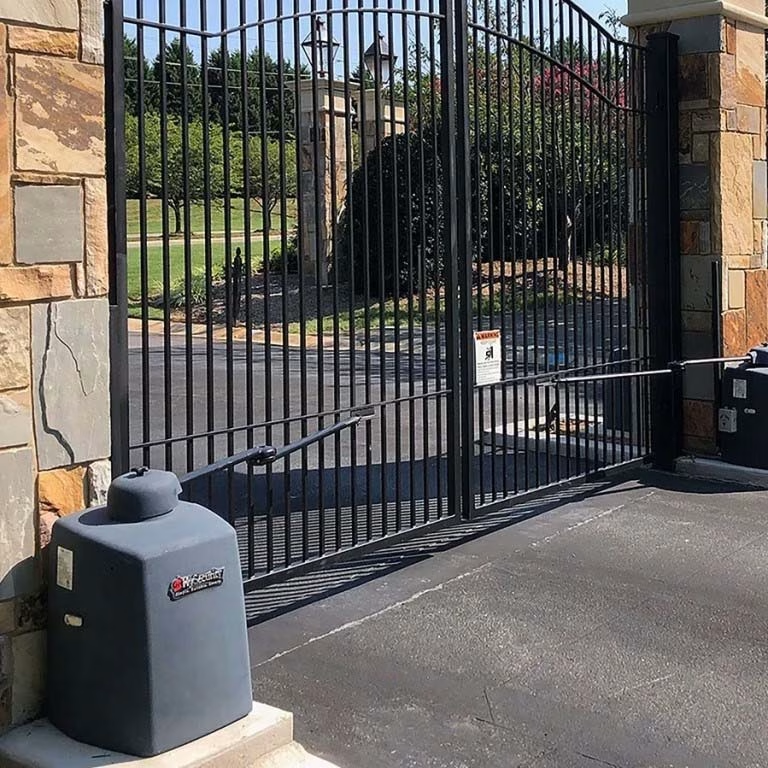
Automation performance depends on gate material weight, surface area, and wind load, which influence operator sizing, hardware strength, and reliable operation of electric gates in Sacramento, CA.
Material-driven factors that affect automation reliability include:
- The gate weight that determines motor capacity and start-stop control
- Panel size and wind pressure that affect strain and alignment
- Post strength and hinge support are needed for long-term stability
- Slide or swing layout requirements based on space and slope
- Safety device placement for vehicles and foot traffic near the entry
Material-driven planning keeps automation stable and prevents strain on motors and hardware, and gate operator installation ensures the system is sized correctly for smooth, reliable operation.
Maintenance Expectations by Material
Maintenance requirements vary by gate material, so understanding surface care and hardware wear helps custom driveway gates stay reliable and protect curb appeal over time.
Common upkeep needs by material often include:
- Metal gates need finish protection to reduce corrosion and surface wear
- Wood gates require sealing to support wood stability in the heat and sun
- Aluminum surfaces benefit from routine cleaning to maintain appearance
- Composite panels need light cleaning to keep a consistent finish
- Hinges and moving parts need periodic lubrication for smoother cycling
Finish protection plays a major role in long-term appearance and corrosion resistance, and powder coat helps keep the surface durable while reducing visible wear over time.
How Material Choice Affects Average Cost and Project Scope
Material choice affects both scope and cost considerations by changing how the gate is built, supported, and operated over time.
Budget drivers that commonly influence project scope include:
- Gate size and type of gate, including swing or slide layout needs
- Choice of materials and how each build handles wind load and weight
- Electric gates equipment sizing based on surface area and ease of use
- Site conditions like slope, post footing requirements, and power access
- Design elements that increase fabrication time and finishing work
Cost considerations often depend on gate size and automation needs, and our guide on How Much Do Custom Driveway Gates Cost in Sacramento? explains what shapes the average cost without listing prices.
Are Premium Materials Worth It for Long-Term Value?
Premium materials can be worth it when long-term durability, consistent appearance, and reliable performance matter more than short-term savings for custom driveway gates in Sacramento, CA.
Value signals that often support higher-grade materials include:
- Better structural stability that helps reduce sagging and alignment drift
- Stronger finishes that protect curb appeal under heat and sun exposure
- Smoother operation with electric gates due to improved balance and rigidity
- Longer service life can reduce repair frequency over time
- Added peace of mind from stronger security and controlled access
Property value and long-term performance often come down to how materials hold up over years of daily use, and our blog on Are Custom Driveway Gates Worth It in Sacramento? explains what to weigh before committing to a premium build.
Choosing the Right Team for Fabrication and Installation
Project results depend on expert craftsmanship, accurate site planning, and reliable customer service, so the right team matters as much as the gate material for custom driveway gates in Sacramento, CA.
Signs of a strong partner often include:
- Clear planning for posts, clearances, and safe operation at the entrance
- Proven experience building custom gates that match architectural style
- Quality fabrication standards that support the highest quality finishes
- Proper coordination for custom driveway gate installation with automation
- Reliable scheduling and support for emergency service needs
Reliable performance depends on proper planning, high-quality fabrication, and strong support after installation, and automated gate systems help ensure that the full entry setup operates safely and consistently.
Choose the Best Material for Custom Driveway Gates With Confidence
Selecting the best material for custom driveway gates means balancing durability, security, maintenance requirements, and the gate design goals that match your architectural style. The right material protects curb appeal, supports the smooth operation of electric gates, and helps strengthen long-term property value in Sacramento, CA.
Whether you live in Auburn, Elk Grove, Folsom, Rancho Cordova, Citrus Heights, Galt, West Sacramento, East Sacramento, Land Park, Natomas, Oak Park, Davis, Roseville, or Rocklin, Central Valley Gates & Access Controls can secure your property and make your home into your castle!
Contact us or give us a call today to schedule a free estimate and discuss the right material for your driveway gate.